At RA Power Solutions Pvt. Ltd., we have spent nearly five decades carrying out engine repair work on board vessels, in power plants, and at industrial sites where equipment cannot always be dismantled or moved. In many cases, our work begins after a machinery failure has already affected operations, and the objective is straightforward—restore the equipment safely while keeping downtime to the minimum practical level.
Every repair starts with inspection, dimensional measurement, and an assessment of whether the component can be restored within OEM tolerances. Depending on the engine condition, the work may be completed during a scheduled drydock, alongside, or, where operating conditions permit, while the vessel remains in service.
Our scope includes crankshaft grinding repair, engine overhaul, crack repair of cast components, cylinder liner reconditioning, white metal bearing rebabbitting, connecting rod restoration, and complete diesel engine refurbishment.

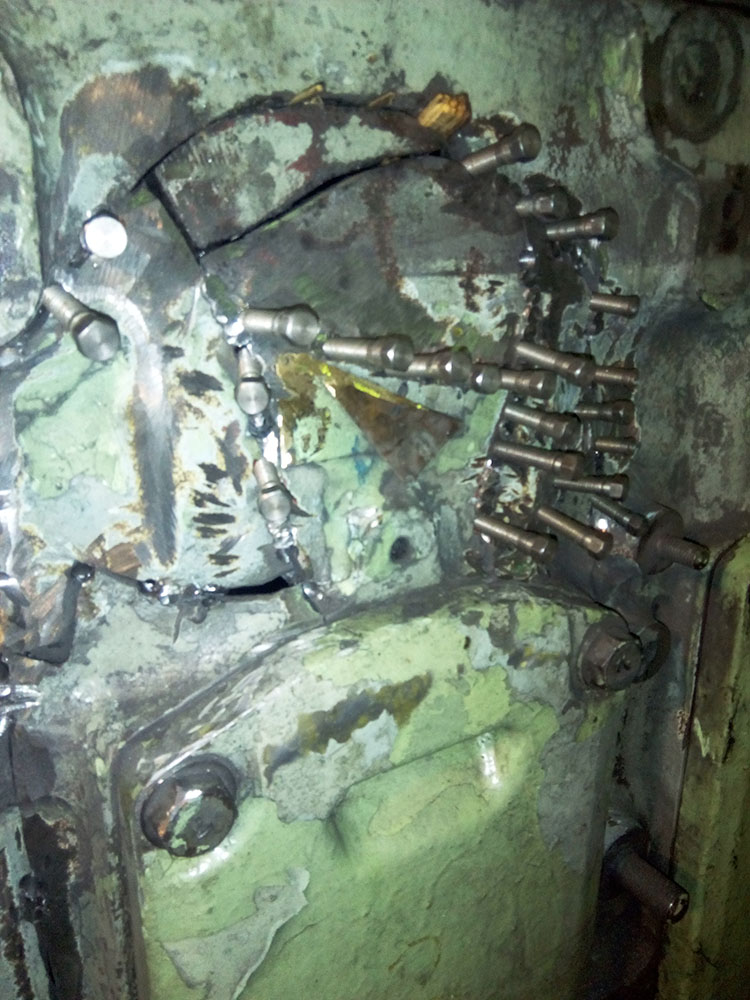
When a cast iron engine component cracks, welding is rarely the preferred option for large marine castings. The heat introduced during welding can distort the casting and create additional stress. In our experience, a properly executed cold repair using metal locking and metal stitching provides a dependable solution for many engine components.
Lower crankcases, entablatures, cylinder heads, and similar cast iron structures occasionally develop cracks due to overload, vibration, or mechanical damage. We machine the damaged area, install specially designed metal locks and stitching pins, and restore the structural integrity of the casting without applying heat.
Engine block repairs are often required where dismantling the complete engine is impractical. Depending on the location and operating condition of the vessel, we can perform cold metal stitching repairs on board, including while the vessel remains in operation.
We have repaired cracked Wärtsilä engine blocks rated at 6 MW using specially designed alloy locking keys combined with metal stitching. Before beginning the repair, we inspect the complete crack path to ensure no hidden propagation remains.
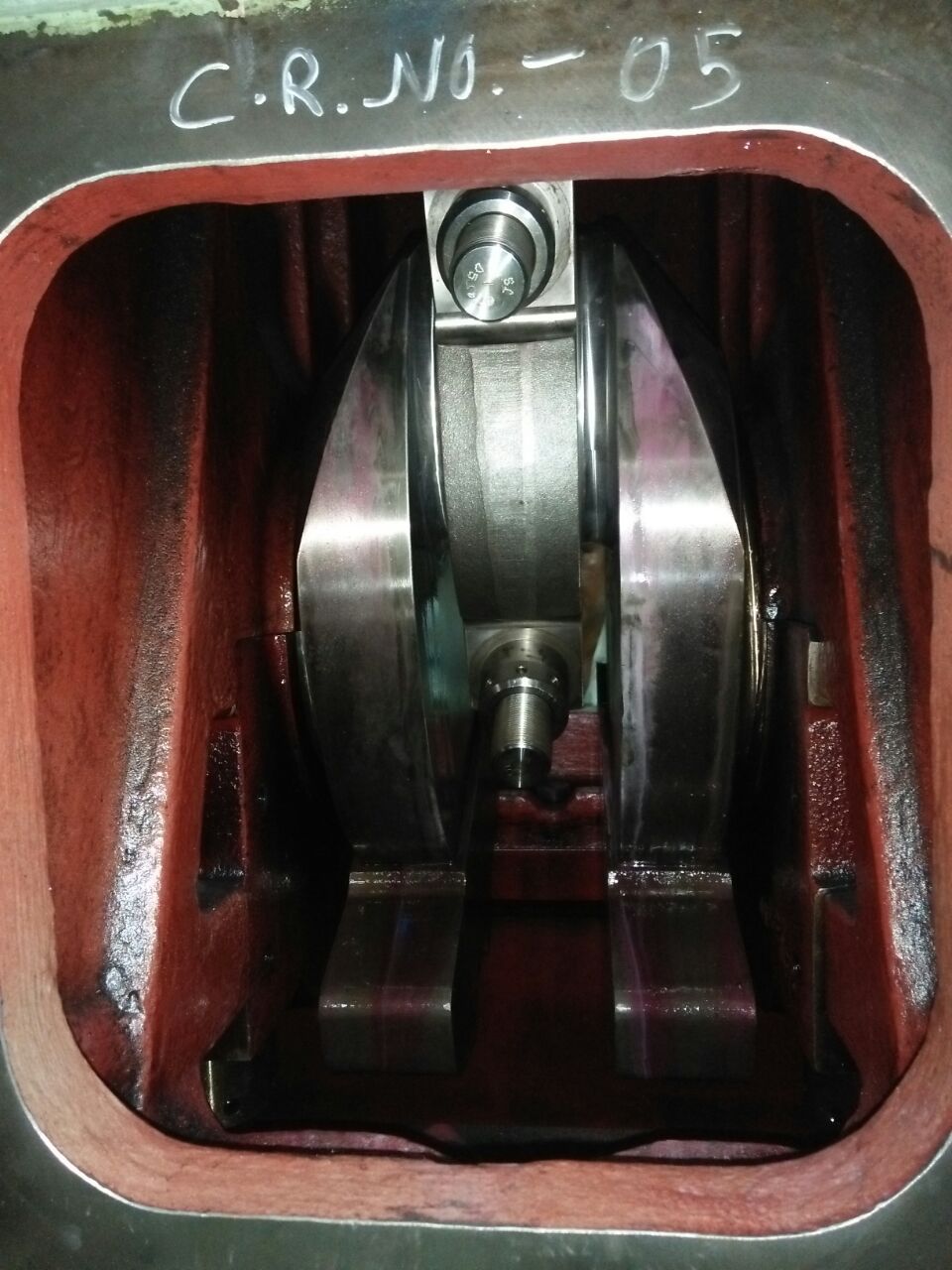
We regrind crankpins and main journals up to 700 mm diameter. Final dimensions are maintained strictly within the manufacturer's recommended tolerances before undersize bearing shells are selected where applicable.
Crankpin damage normally follows bearing failure, inadequate lubrication, contamination, or abnormal loading.
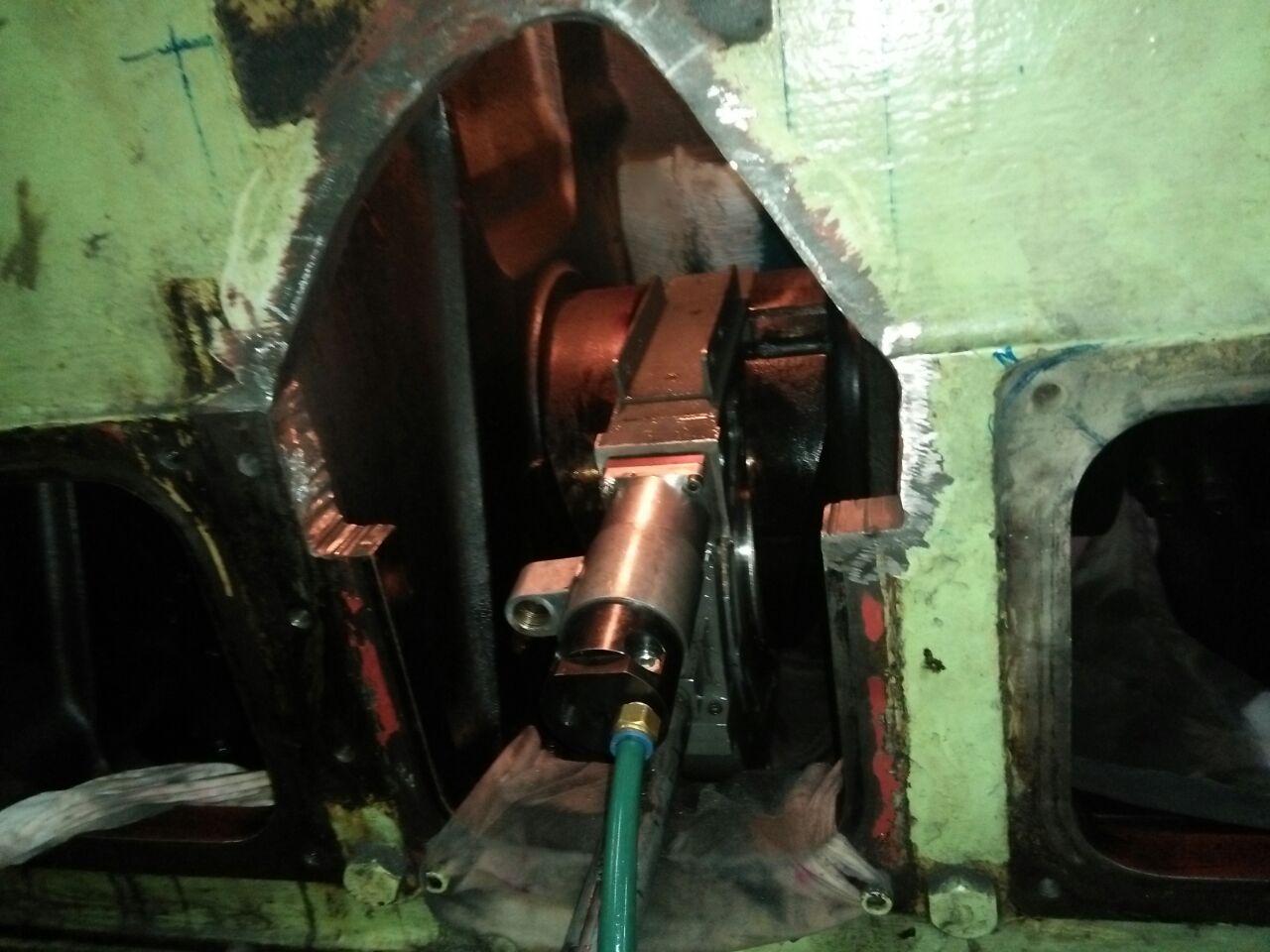
Before machining, we inspect journal condition, measure taper and ovality, and confirm that the crankpin remains within permissible OEM regrind limits. The crankpin is then ground using portable equipment without removing the crankshaft from the engine entablature.
Following machining, all dimensional checks are repeated before the engine is reassembled.
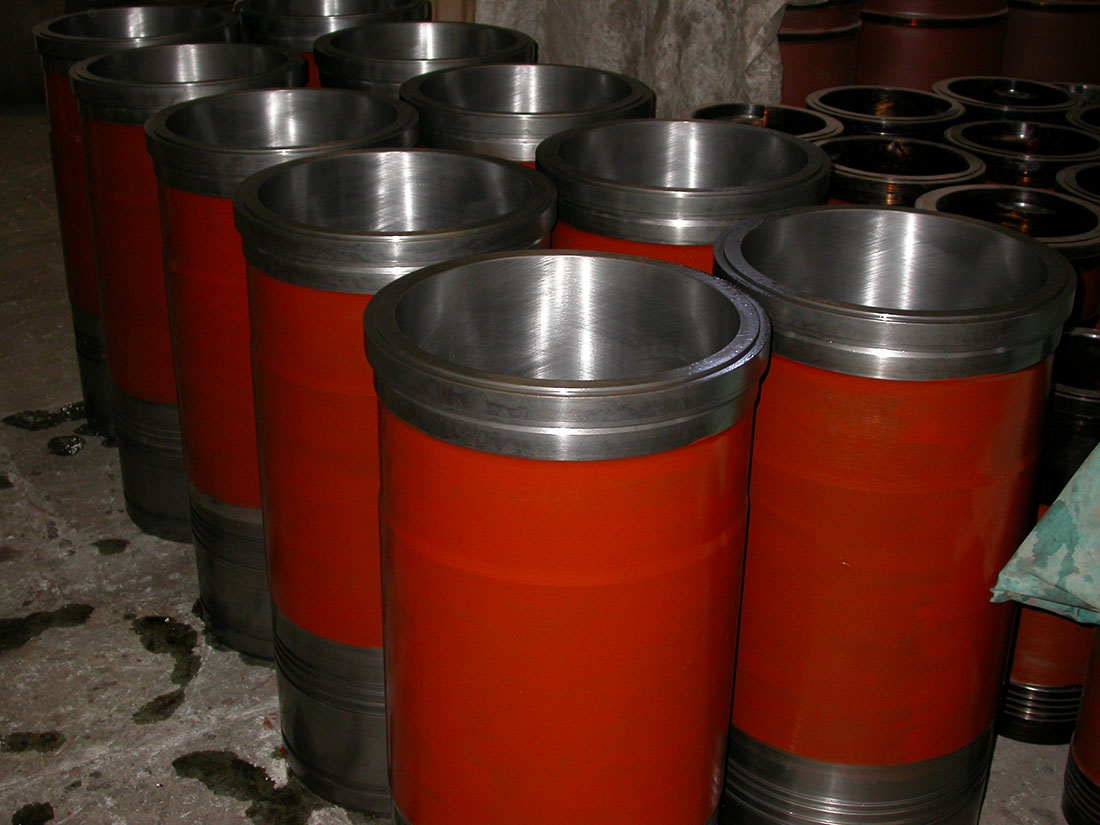
Cylinder liners gradually lose their original geometry after extended service. The most common findings during inspection are taper, ovality, polishing of the running surface, and increased lubricating oil consumption.
We restore cylinder liners by honing, removing taper and ovality while producing the correct cross-hatch pattern required by the engine manufacturer.
We undertake cylinder liner honing for engines manufactured by ABB, ABC, Akasaka, Alfa Laval, Allen, Alstom, Bergen, Caterpillar, Cummins, Daihatsu, Deutz, EMD, MAN, MAN B&W, MaK, Mitsubishi, MTU, Sulzer, Wärtsilä, Volvo Penta, Yanmar, and many other engine builders.
Cylinder liner honing is carried out for liners up to 1500 mm bore using Chris-Marine honing equipment.
We also maintain stocks of new and reconditioned cylinder liners for many engine models.
The honing angle and surface pattern are produced according to the engine manufacturer's specifications. Maintaining the correct finish is important for ring seating, oil retention, and long-term liner performance.
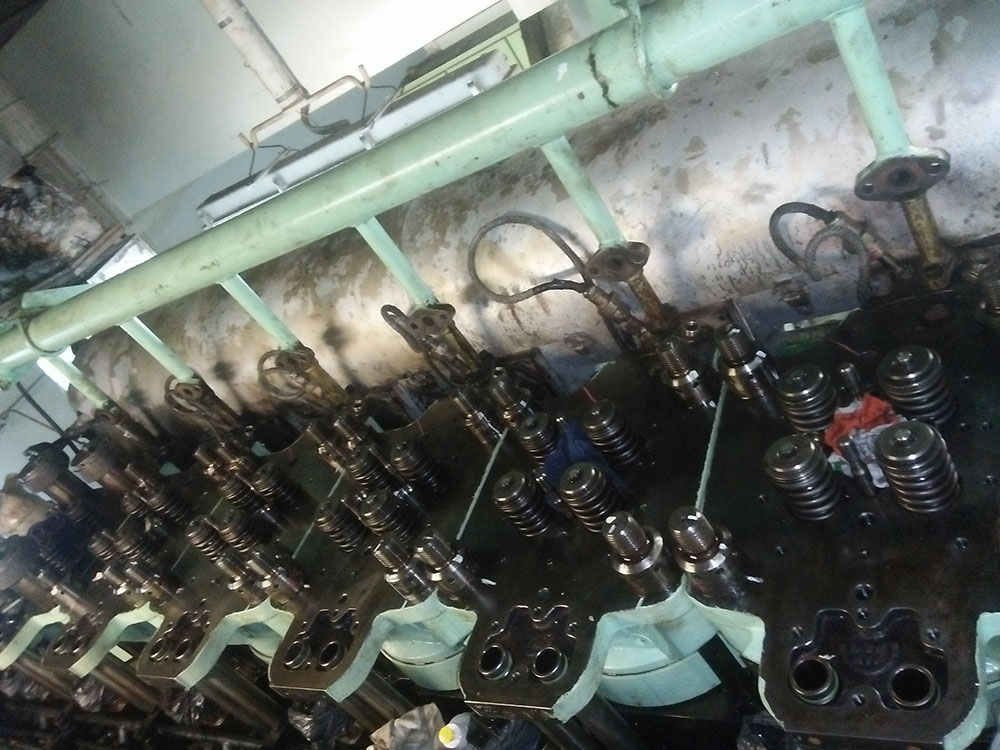
Cylinder heads undergo continuous thermal and mechanical loading throughout engine operation. Common repairs include replacement of valve seats, valve guides, pressure testing, machining, and crack repair. Where cracks are identified in cast iron cylinder heads, we normally recommend metal stitching and metal locking instead of welding.
We supply remanufactured cylinder heads for a wide range of diesel engines after complete inspection, machining, and pressure testing.
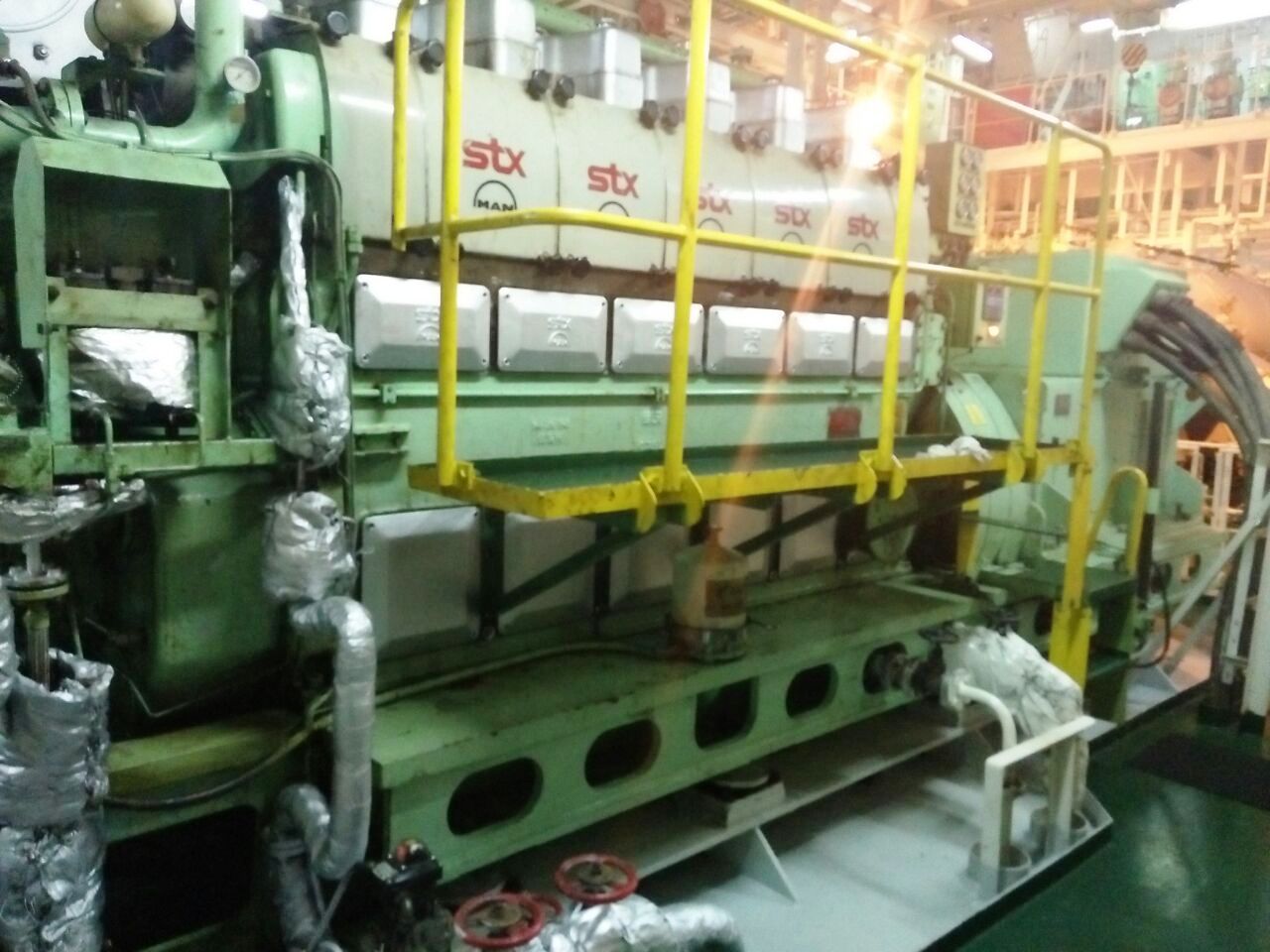
Engine overhauls vary considerably depending on the engine condition. Some projects involve scheduled maintenance, while others begin after a major failure affecting the crankshaft, connecting rods, liners, cylinder heads, or bearings.We undertake both major and minor overhauls for marine and stationary diesel engines. Where site conditions permit, repairs can be completed onboard without removing the engine from the vessel.
Our scope includes complete overhaul of 6.2 MW Mirrlees Blackstone engines, including crankshaft replacement where required following inspection.
We also carry out onsite overhauls of Wärtsilä 18V32 engines. Work is performed by engineers familiar with OEM maintenance procedures and dimensional inspection requirements.
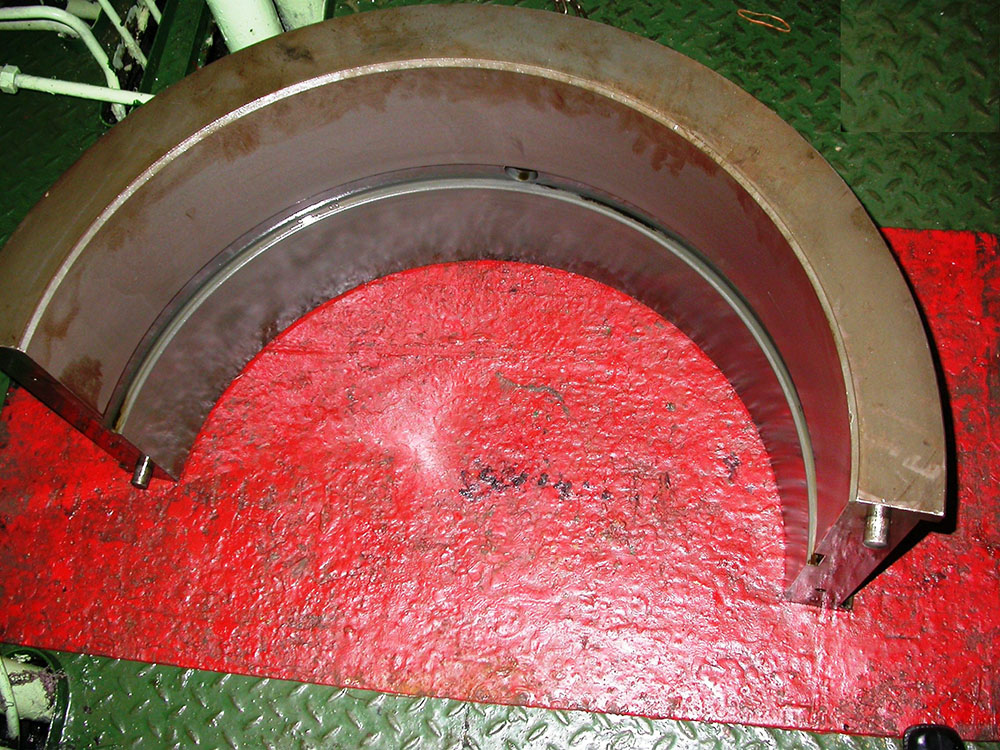
Bearing performance depends heavily on correct metallurgy, bond strength, and machining accuracy.We manufacture and rebabbitt turbine bearings, engine bearings, alternator bearings, pedestal bearings, and other white metal bearings using the centrifugal casting process. Metallurgical certificates are supplied for the white metal used during manufacture.New white metal bearings are manufactured up to 1500 mm diameter.
Pedestal bearings up to 1500 mm are rebabbitted using imported white metal from Spain and centrifugal casting techniques.
New turbine bearings are manufactured according to supplied drawings or approved samples while maintaining specified bearing clearances.
White metal alternator bearings for diesel generating sets are manufactured to customer drawings or original samples.
We manufacture and rebabbitt MOP governor bearings for 210 MW turbines using the specified white metal grade.
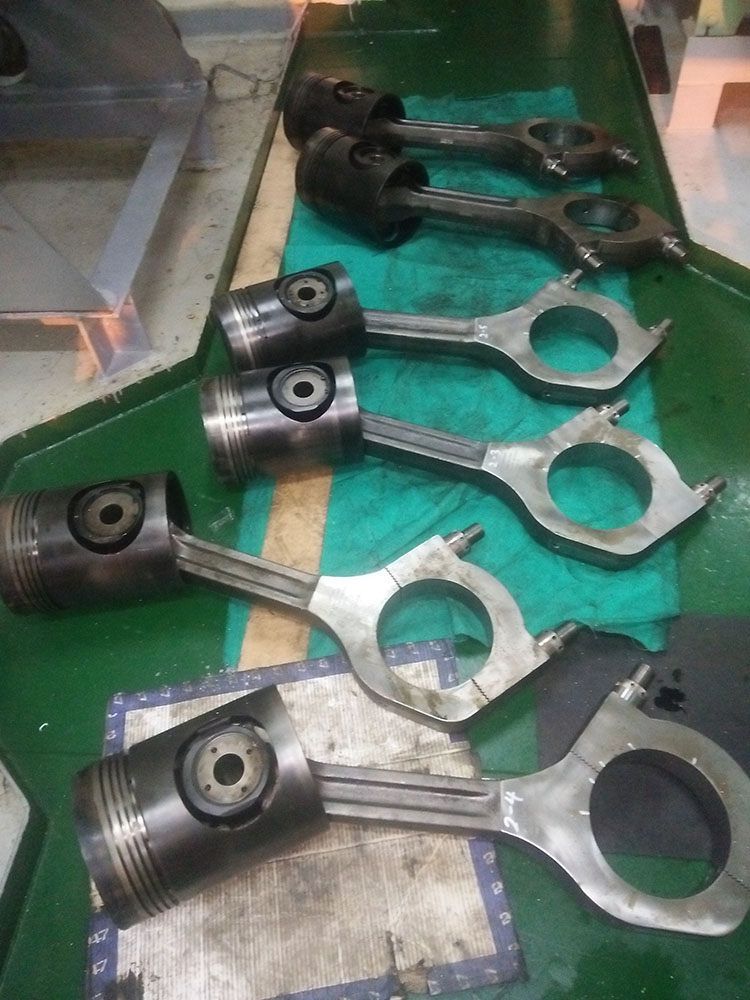
Connecting rods are inspected whenever bearing failure or excessive wear is suspected.
During inspection, we check the big end bore, small end bore, serrations, bolt condition, taper, ovality, and straightness. Connecting rod bolts and serrations are also examined using MPI (Magnetic Particle Inspection) where required. After machining, the bores are restored to standard dimensions in accordance with the manufacturer's specifications.
Reconditioning includes machining of both big end and small end bores, straightness verification, dimensional inspection, and final quality checks before the connecting rod is returned for assembly.
A correctly reconditioned connecting rod helps maintain bearing alignment, oil film stability, and long-term engine reliability.