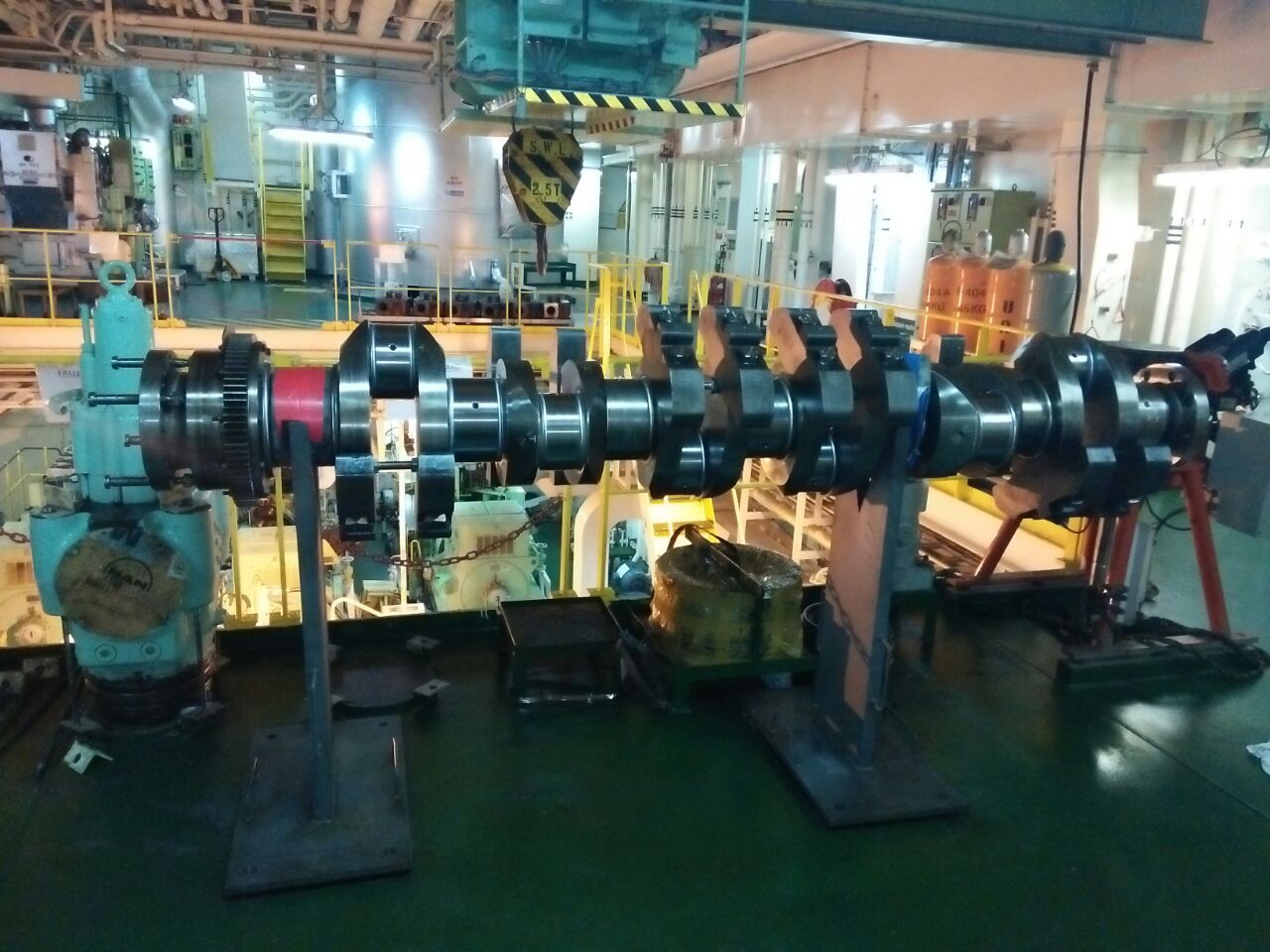
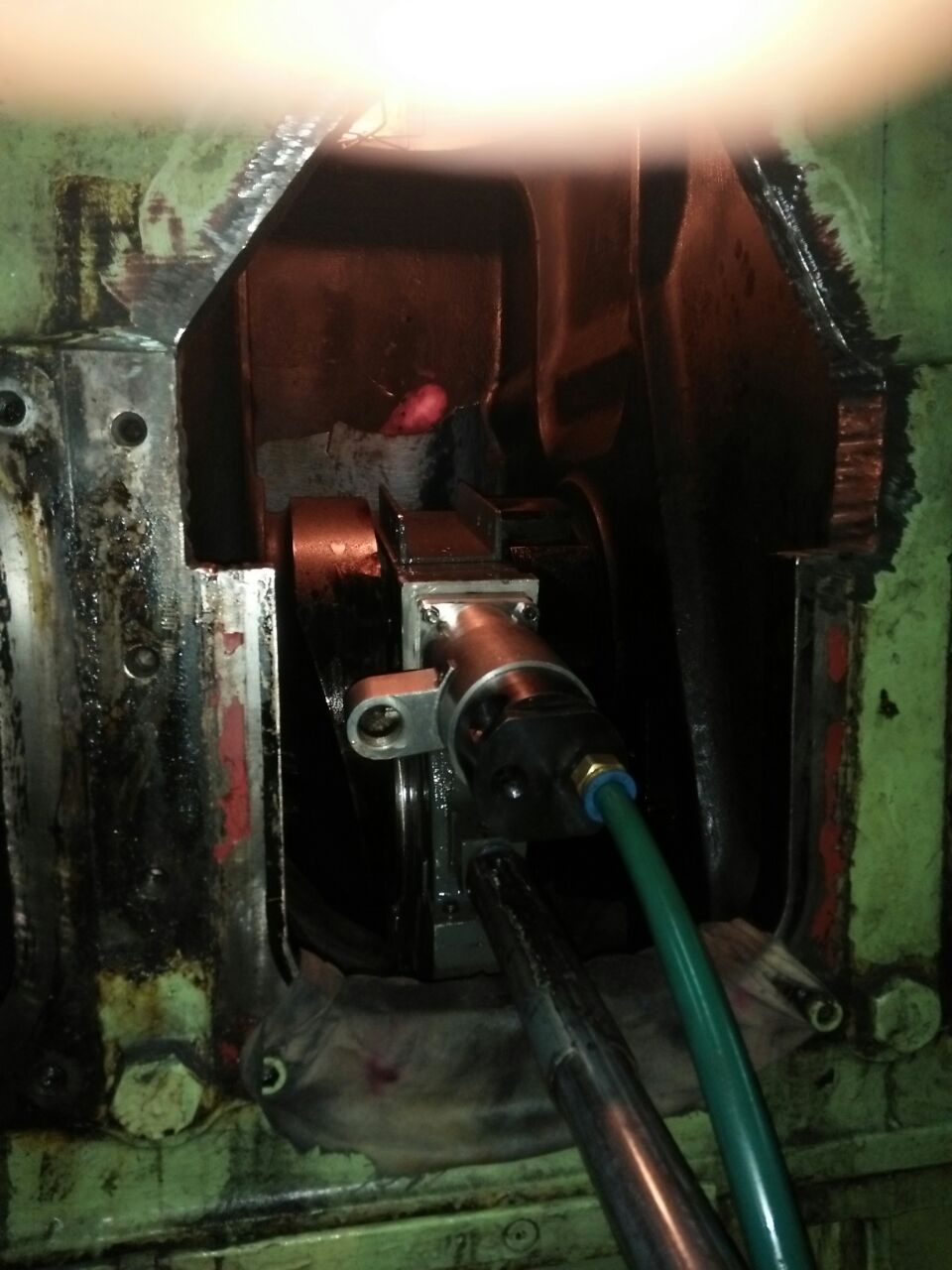
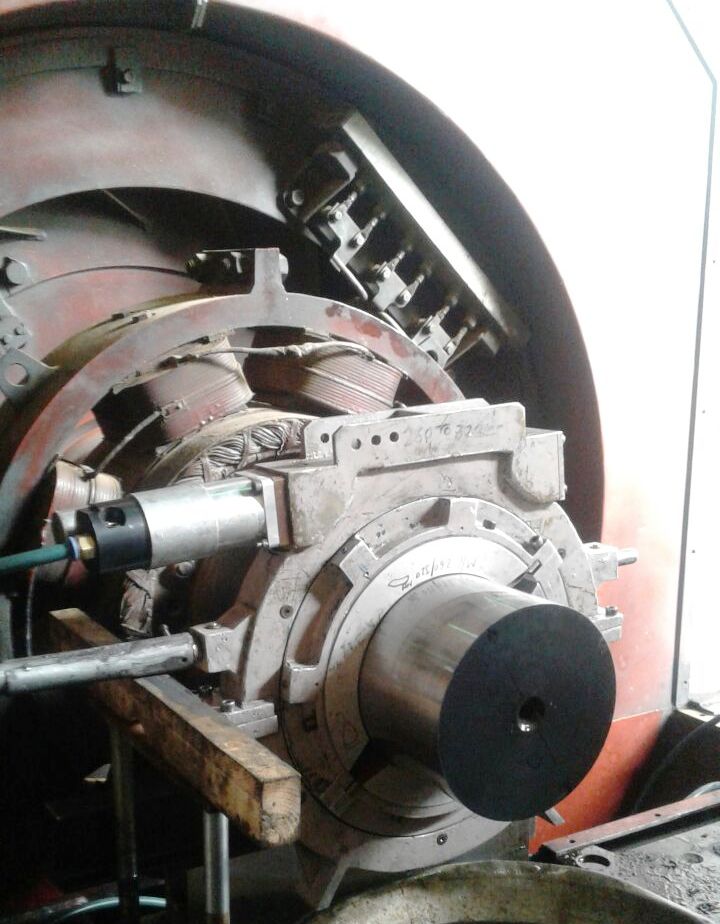
From our experience, keeping the crankshaft inside the engine is often the most practical approach. Removing a large crankshaft means additional lifting arrangements, transportation risks, longer downtime, and higher repair costs. By carrying out the repair in situ, we avoid those issues while restoring the crankshaft within OEM regrind limits.
We routinely perform ONSITE CRANKSHAFT GRINDING without removing the crankshaft from the diesel engine. In many cases, this approach has replaced conventional workshop repairs because it reduces vessel downtime and eliminates unnecessary dismantling while maintaining the dimensional accuracy required for reliable hydrodynamic lubrication and bearing performance.
 |
 |
| Damaged Crankpin Having Line Marks | Crankpin before inspection and repairs |
We undertake crankshaft grinding, crankshaft repair, and crankshaft polishing for engines installed onboard vessels, in power plants, and in industrial facilities worldwide.
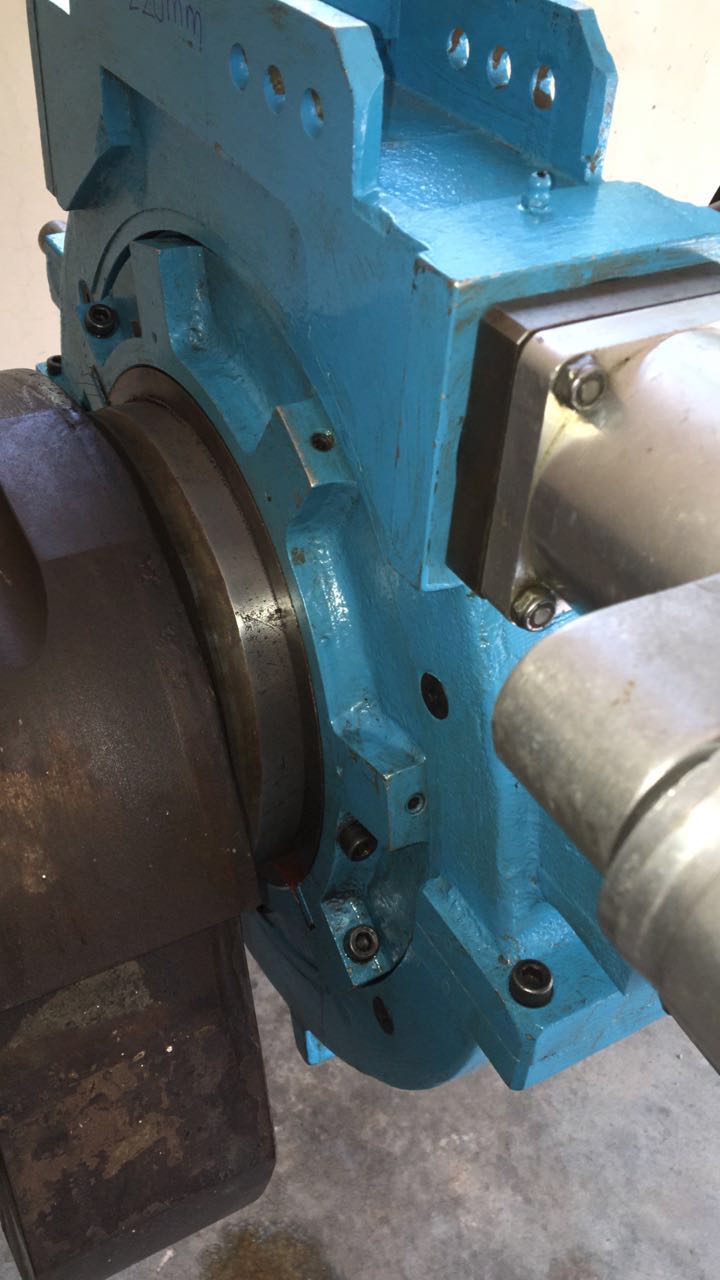
Our equipment covers crankpin and main journal diameters ranging from 60 mm to 700 mm, and all grinding is carried out onsite without removing the crankshaft from the engine block. Throughout the process, we monitor journal dimensions, ovality, taper, fillet radius, and Ra surface finish to ensure the repaired journal meets OEM specifications and is suitable for installation with the correct undersize bearing shells where applicable.
After nearly five decades in this field, we have seen a wide variety of crankshaft damage, from bearing seizure and journal scoring to localized overheating and wear. Our technicians are trained to assess the actual condition of the crankshaft before deciding the repair procedure. The portable grinding equipment we use has been developed specifically for onsite machining of large diesel engine crankshafts where workshop repairs are not practical.
Our in-situ repair procedure generally includes the following:
 |
| MPI testing of damaged crankpin |
 |
| Crankpin having smooth surface after grinding and polishing |
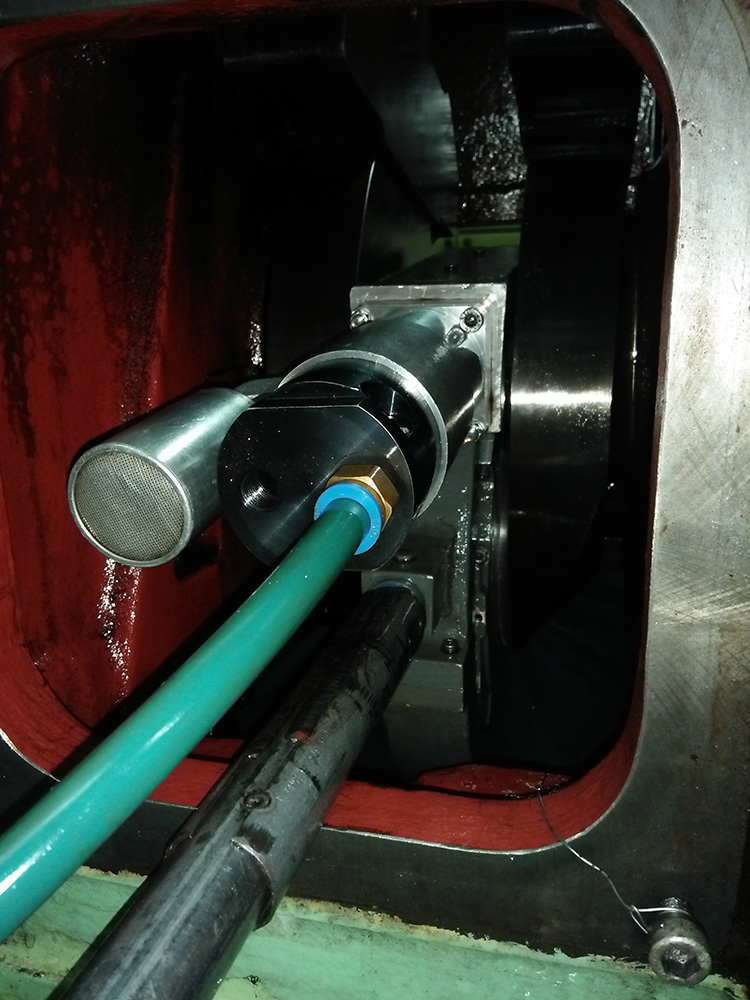
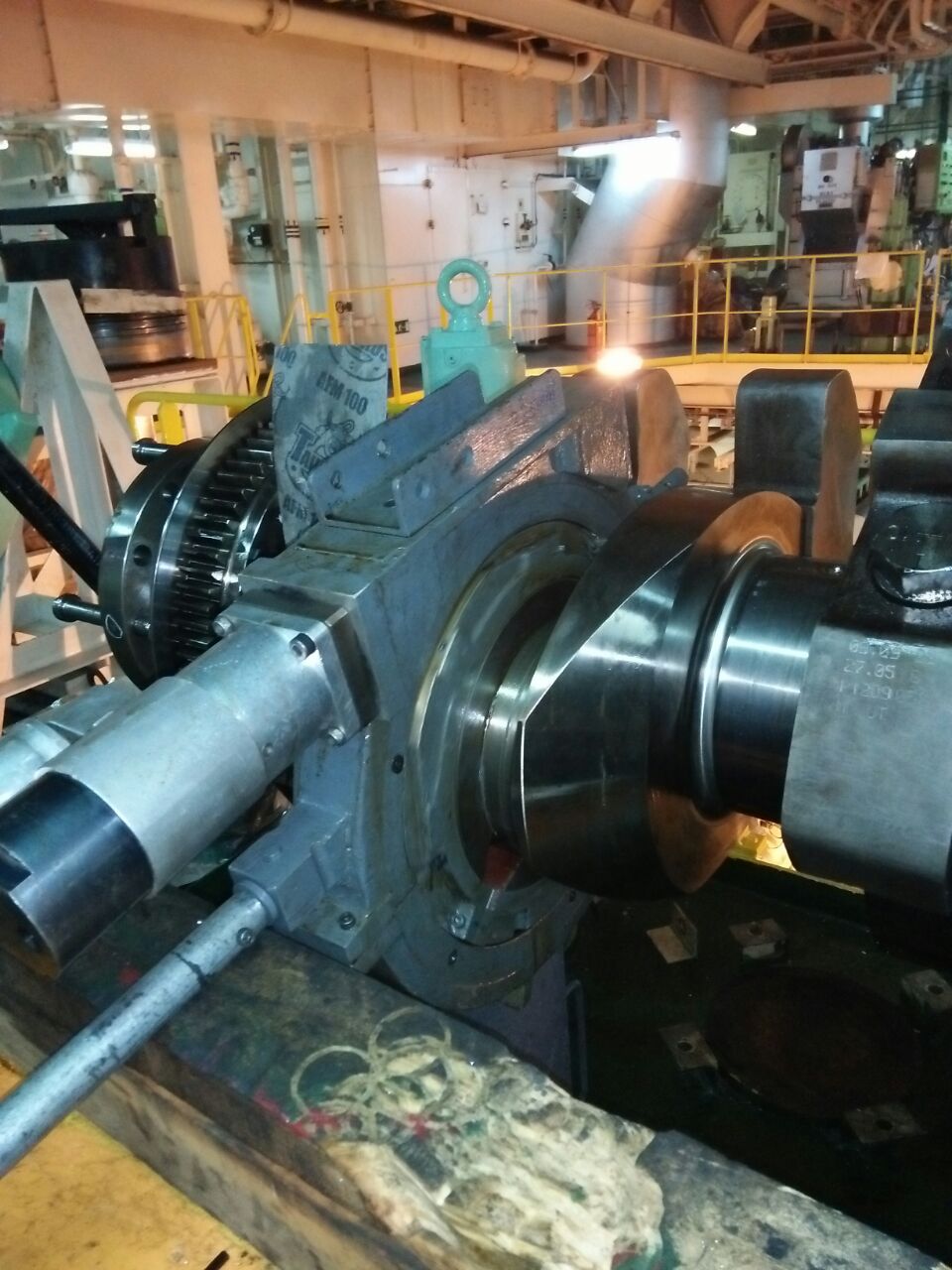
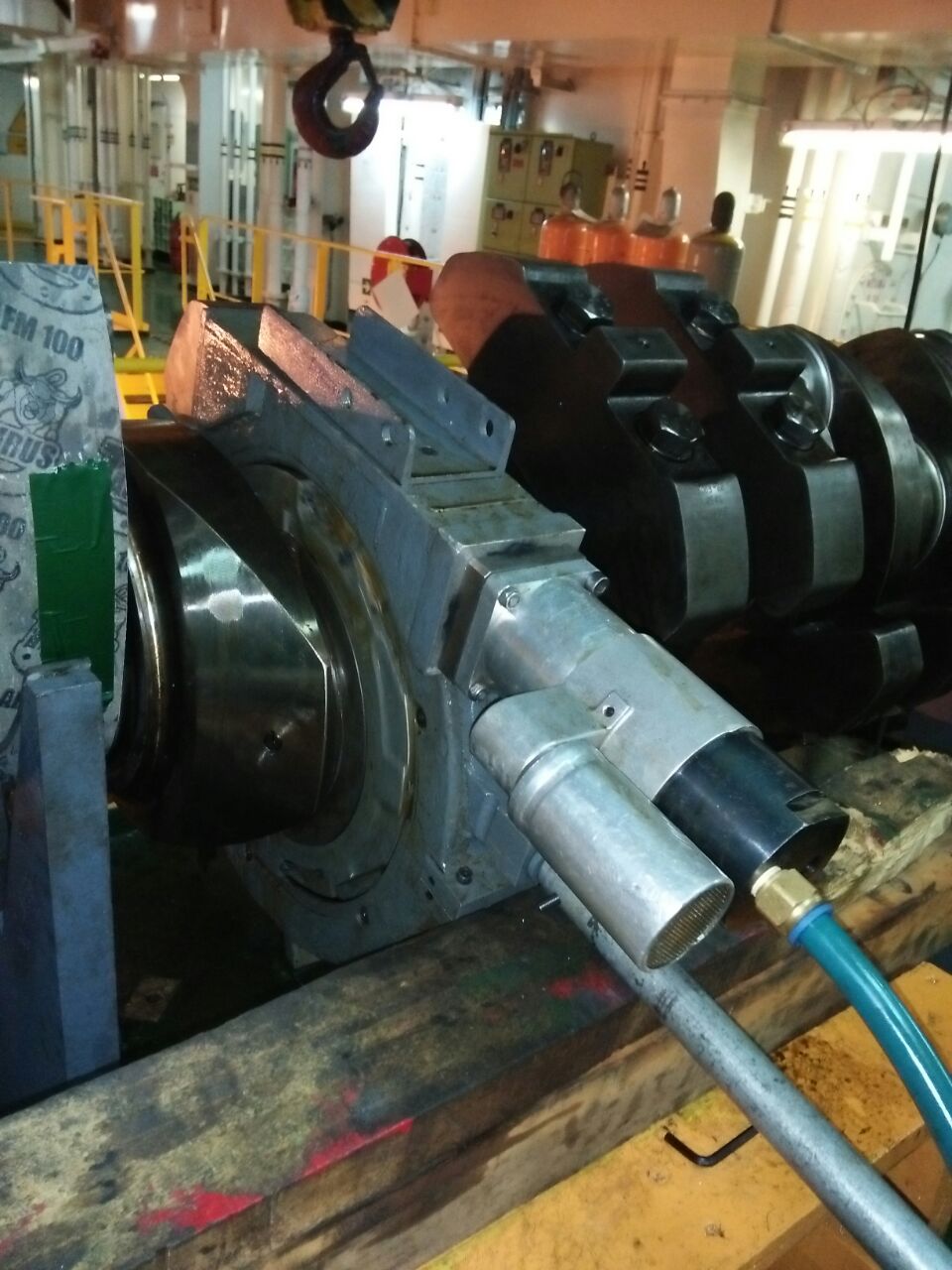
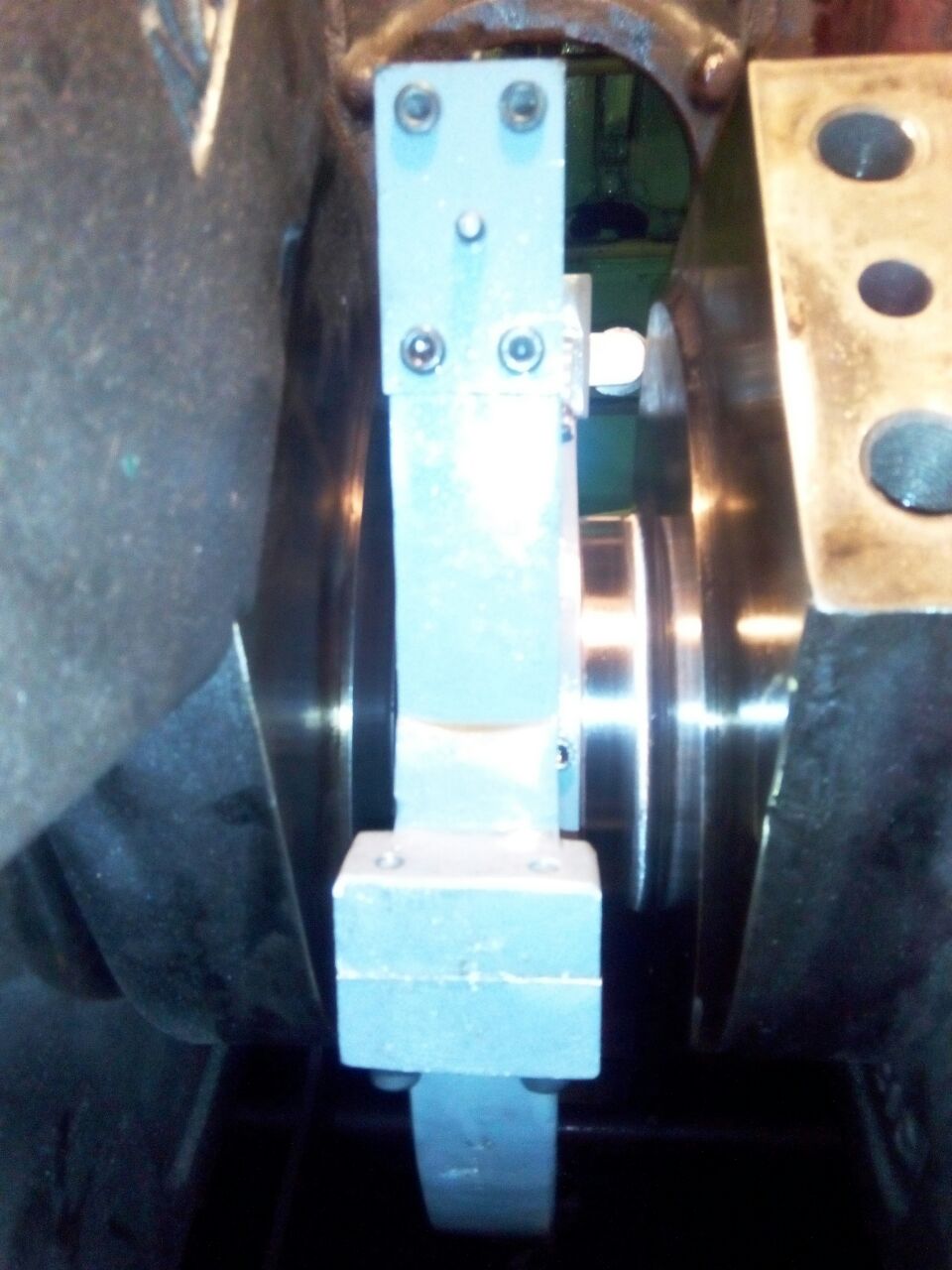
In the field, we often find access inside an engine room limited, especially on medium-speed and slow-speed marine engines. For that reason, we use portable insitu grinding equipment designed to operate directly on the crankshaft without removing it from the engine block. The setup allows us to machine and polish the crankpin or main journal in a single installation, which reduces setup time and minimizes the possibility of misalignment.
Throughout the operation, we continuously verify crankpin and main journal dimensions, ovality, taper, fillet radius, and Ra surface finish. Final tolerances are maintained strictly within OEM specifications so the crankshaft is suitable for service with the specified undersize bearing shells where required.
Every repair is planned by a senior engineer and executed by experienced technicians using portable inspection equipment for hardness testing, magnetic particle testing (MPT), crankshaft deflection checks, and dimensional verification before and after machining.
Where access inside the engine block is restricted, we manufacture special-purpose tooling to complete the repair without unnecessary dismantling.