Turbine shaft repair is a precision engineering activity that requires experience, accurate measurements, and portable machining equipment capable of restoring the journal to OEM specifications without dismantling the equipment. Over the years, we have carried out turbine shaft repair, rotor shaft repair, and alternator journal grinding on power plants, marine installations, and industrial facilities where minimizing downtime is a priority.
From our field experience, the success of any in-situ repair depends on proper inspection, accurate setup of the grinding equipment, continuous dimensional checks during machining, and final verification of taper, ovality, and surface finish before the machine is returned to operation.
Removing a turbine rotor or alternator shaft can significantly increase shutdown time and repair costs. In many cases, the damage is confined to the journal surface, making turbine shaft repair possible without dismantling the complete assembly.
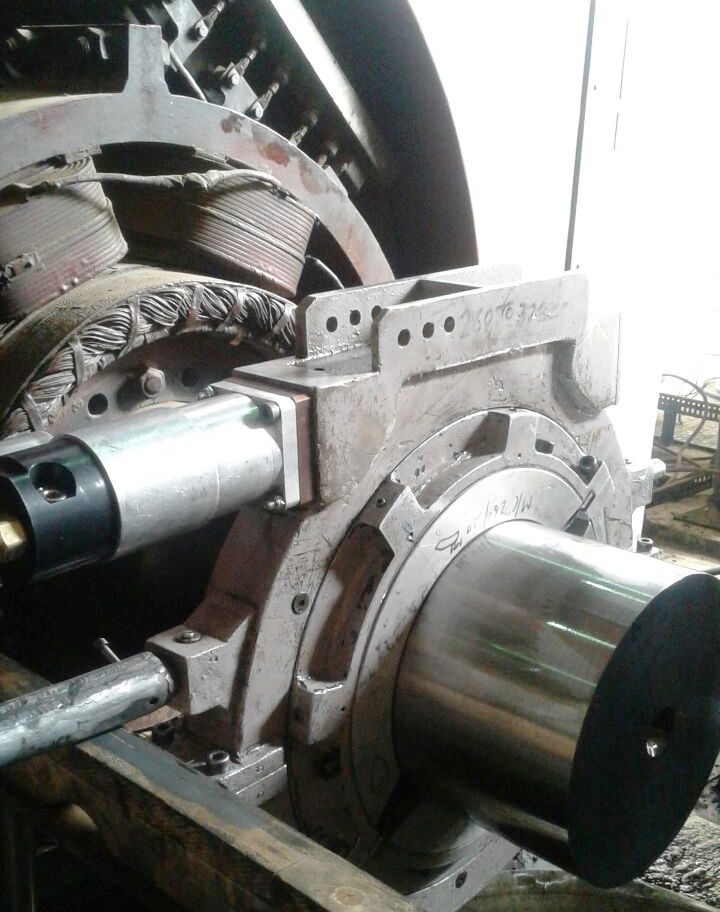
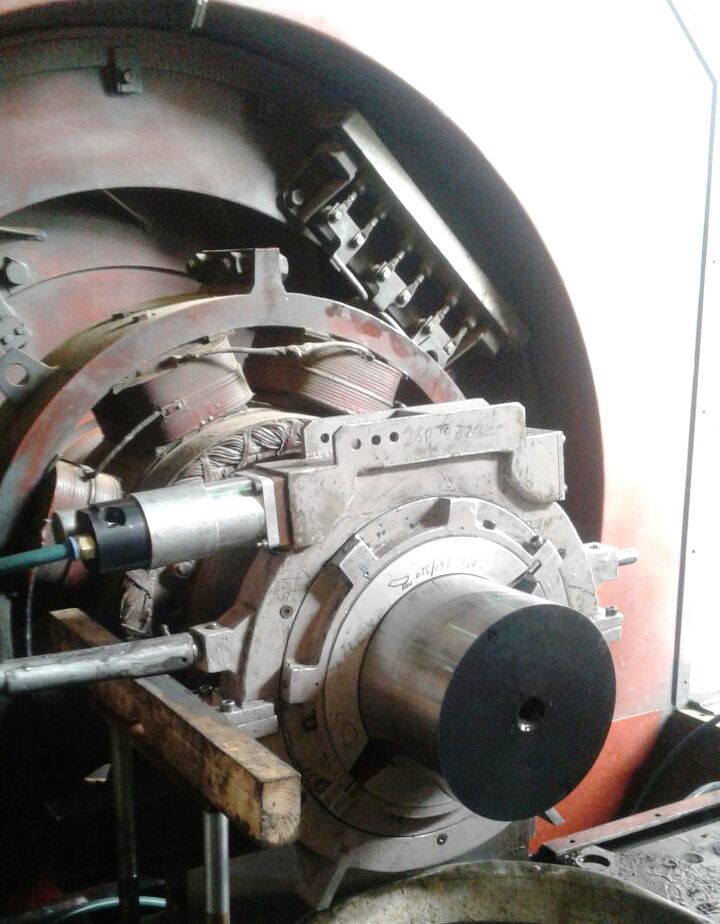
The complete repair is carried out at the installation site using specially designed portable crankshaft grinding equipment that is mounted directly on the machine.
Our portable grinding equipment has been developed for in-situ journal restoration under site conditions.
During every repair, dimensional accuracy is continuously monitored. Maintaining OEM tolerances is essential for correct bearing performance and vibration control.
Maintaining these tolerances helps preserve hydrodynamic lubrication between the journal and white metal bearing under operating conditions.
The journal surface is finished by controlled grinding and polishing until the required surface roughness is achieved.
The final surface finish is verified using calibrated measuring instruments before the equipment is released for operation.
No shaft repair should begin without understanding the actual condition of the journal. We always perform detailed inspections before machining and verify the results after completion.
These inspections help determine whether the shaft is suitable for in-situ repair and confirm that the repaired journal complies with the required specifications.
Journal damage is often accompanied by bearing wear. Where required, we also undertake bearing restoration work.
The repaired journal and bearing are matched to achieve the required running clearance and proper oil film formation.
From our experience in the field, every turbine shaft behaves differently depending on operating load, lubrication condition, and previous maintenance history. Accurate measurements during every stage of grinding are more important than the amount of material removed.
We have successfully completed more than 100 onsite repair jobs involving the following:
All these repairs were completed without dismantling the equipment from its installed position, reducing shutdown time and eliminating the need for transportation to a workshop.
One of the recent turbine shaft repair jobs was carried out on a turbine journal with the following specifications.
| Manufacturer: | Shandong Jinan Power Equipment, China |
| Installation Location: | Madhya pradesh |
| Output: | 168.8 MVA |
| RPM: | 3000 |
| Journal Specifications: | Diameter 315 mm, width 400 mm |
The journal was repaired in situ using portable grinding equipment. During machining, taper and ovality were maintained within 20 microns, while the final surface finish achieved an Ra value within 0.30 microns. After completion, dimensional checks, crack detection, hardness verification, and surface finish inspection were carried out before the unit was returned to service.
In many power plants and marine installations, removing a turbine rotor is not practical because of the additional downtime, lifting arrangements, and realignment work involved. When the journal condition is within OEM regrind limits, in-situ repair provides a practical alternative.